
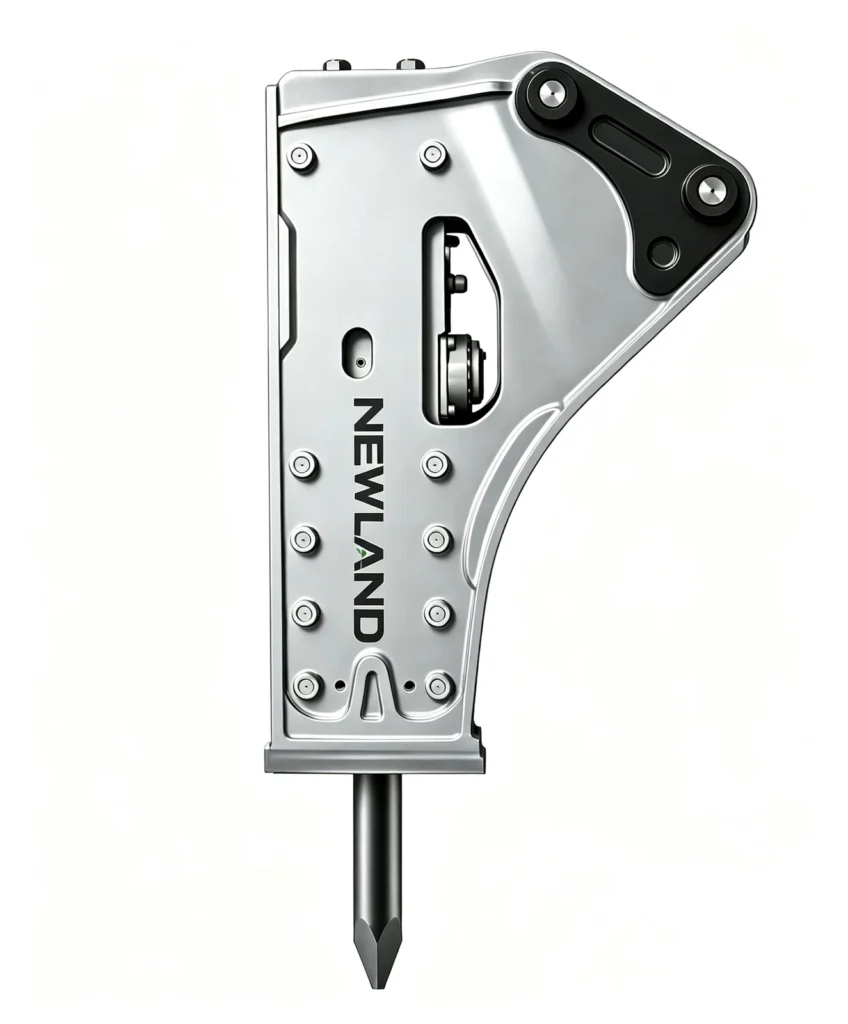
A hydraulic breaker that will not work, strikes slowly or behaves inconsistently needs a clear symptom record before a replacement part is selected. Start with what happened, identify the equipment involved and keep observations separate from any confirmed inspection findings. That gives the people reviewing the problem a useful starting point.
Start with the symptom, not a guessed replacement part
“Not working” can describe several different observations. The breaker may show no response, operate more slowly than usual, work intermittently or produce a result that seems weaker than on earlier jobs. Write the observation in ordinary language before attaching a suspected component name to it. If your team has already inspected the equipment, include the written findings separately.
Follow the applicable equipment instructions and site procedures when deciding whether the equipment can continue operating. Arrange inspection through a suitably qualified equipment professional. A purchasing message can help organize the information needed for that inspection and for any subsequent parts request.
Separate no operation, slow operation and intermittent operation
Choose the description that best matches the event and add the conditions under which it occurred. Avoid combining several observations into a single phrase such as “the hammer is broken.” A short sequence is more useful: what the operator noticed first, what changed next and whether an inspection has taken place.
- No operation: State when the lack of response was first noticed and whether the setup had recently changed.
- Slow or apparently weak operation: Describe what you are comparing it with, such as earlier work on the same machine. State any difference in material or task.
- Intermittent operation: Explain whether the behavior was continuous or occurred at particular points during the work already observed.
Record existing observations. There is no need to reproduce an abnormal condition to complete a purchasing inquiry. If the description is uncertain, mark the uncertainty in the record.
Gather the equipment identity and recent history
Keep the complete breaker identification with the carrier details. Include readable identification photographs and any serial or version references already available. If a quick coupler is part of the configuration, identify it separately. A machine nickname or an unlabelled photograph can leave the reviewer unsure which equipment the request concerns.
Add a brief timeline. Useful entries include when the issue began, whether the breaker previously worked in this configuration, any recent component replacement and any documented change to the carrier or mounting arrangement. State who supplied each observation and when it was recorded. Changes are context for a review; they do not establish the cause.
If the configuration is new, the hydraulic breaker selection checklist can help you gather the carrier, application and mounting records for a separate compatibility review.
Keep observations separate from technician findings
Attach the documents you already have, with a clear description of their source. For example, an operator’s report, a workshop inspection record and a specification page answer different questions. Keep them labeled so a purchasing contact can see which points are observed, measured or still unconfirmed.
Where a qualified technician has recorded readings, include the units, test conditions, equipment reference and the technician’s conclusion. Do not copy a setting from an unrelated machine or treat an online example as a value for your breaker. Pressure settings, gas charging and internal inspection require the applicable product information and professional assessment.
Photos can identify an item or show an existing observation, but a photograph alone cannot confirm the condition of an internal component. Keep the inspection outcome with the inquiry if replacement parts are subsequently recommended.
Turn a confirmed parts requirement into a clear request
Once the inspection identifies a component requirement, give each requested item its own line. Include the part name, available reference, quantity and the breaker identity it relates to. Keep an illustration position separate from a part number. If a reference is missing, say so rather than selecting a similar-looking item.
Use the breaker parts identification guide to organize photographs and existing dimensional records. The NEWLAND breaker parts range provides a starting point for inquiries about the components shown on the site. Supply and compatibility need to be reviewed for the specific request.
Have a confirmed parts requirement? Send NEWLAND the breaker identity, inspection finding and numbered parts list. Include the information you have and identify anything that still needs confirmation.
Keep the symptom report with your breaker maintenance record so later parts requests can be traced to the same equipment and documented history.
Continue with the relevant product or guide
Hydraulic Breaker Overheating: Information to Record Before Inspection
Hydraulic Breaker Oil Leaks: A Clear Photo and Inspection Record
Hydraulic Breaker Unusual Noise: What to Record for a Technical Review
Hydraulic Breaker Oil Contamination: Milky Oil, Debris and the Inspection Record
Hydraulic Breaker Not Striking: Separate No Impact from Slow Operation
Hydraulic Breaker Hitting Weakly or Slowly: What Changes to Investigate
Hydraulic Breaker Repair or Replacement: Decide the Scope Before Ordering Parts
Hydraulic Breaker Parts